"If a cream could actually clear acne, it would have cured it already, and you'd have stopped buying."
The skincare aisle has been selling fixes for a problem it never checked.
Think about it. If acne came from dirty pores, you'd break out everywhere: your back, your scalp, your shoulders. Instead it's your jaw, your chin, and your cheeks, over and over.
Your face has more blood flow than almost any other skin on your body. When something is off inside, like stress hormones, inflammation, or a gut having a rough month, it tends to show up where the blood flows most.
Triggers are personal. What clears one person can set off another.
So stop guessing and start tracking.
This is the step that matters most
1
Start your skin log today
Every other step in this guide runs on this one. Without a log, you're guessing. With one, your skin starts telling you what's causing it.
- Your skin, every morning. Rate it from 1 to 10, where 10 is your worst day. Woke up with new bumps? That's a 7. Clear? That's a 1.
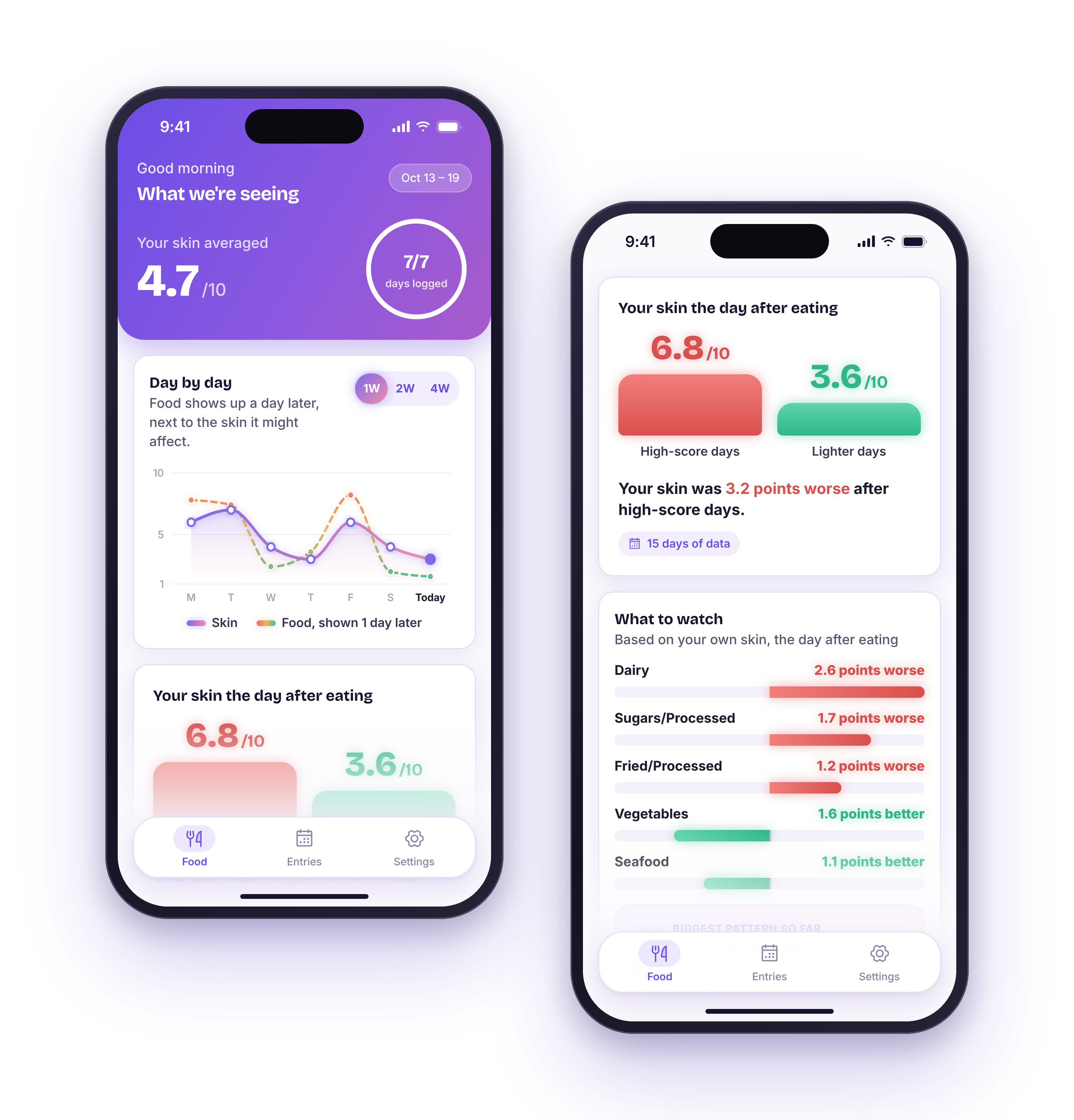
- Your food, every meal. Snap a photo. The app sorts it into dairy, refined sugar, processed, meat and more, and rates how inflammatory each meal might be.
- Your patterns, on one screen. Graphs and a calendar line up your skin scores with what you ate.
Doing this in a notes app is miserable, and most people give up before patterns show. Two to three weeks of logging is when Step 2 starts to make sense.
2
Test one suspect at a time
Look at your log for foods that show up before bad days. Dairy is a common suspect, but not the only one.
Cut one food for two to three weeks, keep everything else the same, then bring it back and watch your score.
Poor sleep raises stress hormones. Same bedtime and wake time, a cool dark room, and phone down an hour before bed.
4
Calm your stress response
Cortisol rises under stress, and for many people that shows up on the skin. Try the physiological sigh: two inhales through the nose, one long exhale through the mouth, for one to five minutes.
Fill your plate with fiber from vegetables, beans, lentils and oats. Fermented foods like kefir or sauerkraut can help if dairy agrees with you.
Some studies link omega-3s with lower inflammation. The evidence is promising, not conclusive. Good sources: salmon, sardines, walnuts, chia, flaxseed.
Some studies suggest zinc may help mild acne. Food sources include pumpkin seeds, chickpeas and lentils. Ask a pharmacist before taking a supplement.
Late, heavy meals can disrupt sleep for some people. Finish your last meal a few hours before bed. Eat enough during the day to feel good.
9
Journal for three minutes
Each night, answer three questions: What stressed me today? What did I eat? What did my skin do? Pair it with your Step 1 log.
You just got the truth ✦
Your triggers are already in your log.
Start today.
→ Start my free skin log
General information only, not medical advice. Check with a doctor or pharmacist before starting supplements or changing your diet, especially if you're pregnant, breastfeeding, or take medication.